
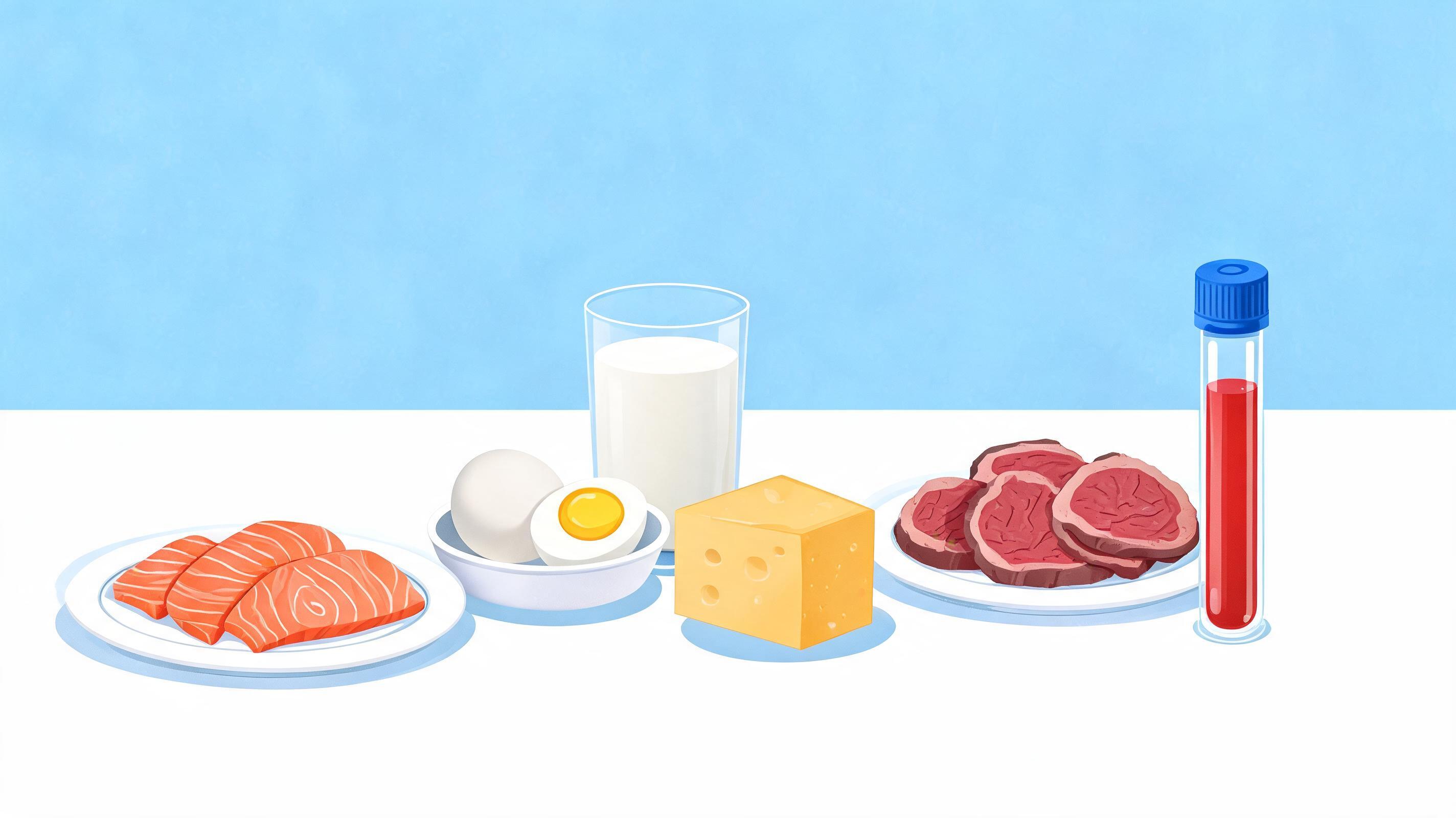
Vitamin B12 (cobalamin) is a water-soluble vitamin needed for the formation of red blood cells, normal nervous system function and DNA synthesis. The daily requirement for an adult is about 2.4 micrograms; 2.6 are recommended for pregnant women and 2.8 micrograms for breastfeeding women. The main sources are meat, fish, eggs and dairy products.
What is vitamin B12 and what does it do in the body?
Vitamin B12 is not produced by the body itself, so it must come from food or supplements. It helps red blood cells mature in the bone marrow, maintains the protective sheath of nerve fibers and supports cell division. If the body lacks vitamin B12, quiet symptoms appear at first, and over time anemia and nervous system problems can develop.
Absorbing the vitamin is not simple: the B12 in food must be released from proteins in the stomach, bind to a substance called "intrinsic factor" secreted by stomach cells, and only then pass into the blood in the small intestine. If any link in this chain is disrupted, a person can become deficient even while eating enough. In practice, this is exactly why doctors look not only at your diet history but also at gastrointestinal diseases and the medications you take.
Vitamin B12 requirement: daily needs by age
The figures below are based on the daily amounts recommended by the Office of Dietary Supplements of the U.S. National Institutes of Health (NIH). Your individual requirement is determined by a doctor based on your health, diet and the medications you take.
Group | Daily requirement (mcg) |
|---|---|
Infants 0–6 months | 0.4 |
Infants 7–12 months | 0.5 |
Ages 1–3 | 0.9 |
Ages 4–8 | 1.2 |
Ages 9–13 | 1.8 |
Age 14 and over (adults) | 2.4 |
Pregnant women | 2.6 |
Breastfeeding women | 2.8 |
In a blood test, the B12 level is reported in different units and with a different reference range depending on the laboratory. For this reason, the result should be evaluated only according to the range on the lab report and your doctor's interpretation.
Vitamin B12 deficiency symptoms
Deficiency often develops slowly over months or even years. That is why the first signs are usually dismissed as tiredness or age-related change. The most common symptoms are:
Constant weakness and tiring easily – tissues receive less oxygen because of anemia.
Pale or yellowish skin, shortness of breath, palpitations.
Numbness and tingling in the hands and feet – may be a sign of nerve damage.
A red tongue, mouth sores or a change in the sense of taste.
Weakened memory, poor concentration, mood changes.
Loss of balance when walking – in more severe cases.
These symptoms can also appear in other diseases, so do not diagnose yourself. If nerve symptoms stay untreated for a long time, the risk of irreversible damage increases, so seeing a doctor in time is important. With such complaints, it is advisable to consult an internal medicine doctor, or a neurologist if nerve symptoms predominate.
A typical real-life example
Suppose a 55-year-old woman has complained for several months of waking up tired in the morning, tingling in her toes and reduced concentration. The first mistake she makes is to say "it's just age" and wait. The right path is to have a blood test and see a doctor with the result: it often turns out that years of taking a medication that reduces stomach acid have impaired the absorption of the vitamin. Such examples show that the cause of deficiency may not be diet alone.
Who is at risk of vitamin B12 deficiency?
Vegetarians and vegans – B12 occurs naturally mainly in animal-derived products.
People over 50 – reduced stomach acidity makes it harder to release the vitamin from food.
People with gastrointestinal disease – atrophic gastritis, Crohn's disease, celiac disease, and those who have had stomach or bowel surgery.
Those who take metformin or acid-reducing medications for a long time.
Pregnant and breastfeeding women, especially those with a restricted diet.
People who misuse alcohol.
During pregnancy, monitoring the B12 level is important for the development of both the mother's and the baby's nervous system. You can consult obstetrician-gynecologists on this subject.
Which foods contain vitamin B12?
The richest sources are animal-derived foods. According to NIH data, a serving of about 85 grams (3 ounces) contains the following amounts:
Food | Approximate B12 amount |
|---|---|
Beef liver | very high (about 70 mcg) |
Fish (salmon) | about 4–5 mcg |
Beef | about 1.5–2.5 mcg |
Milk (1 cup) | about 1.2 mcg |
Yogurt (1 serving) | about 1 mcg |
Egg (1 piece) | about 0.6 mcg |
In other words, a person who eats a serving of fish, a glass of milk and one or two eggs a day usually meets the daily requirement easily.
Sample daily menu
Breakfast: 2 eggs and a glass of milk – about 2.4 mcg.
Lunch: a serving of salmon – about 4–5 mcg.
Dinner: yogurt – about 1 mcg.
This menu is well above the requirement, meaning that a person with a balanced diet has a low risk of deficiency. Plant foods contain almost no natural B12. For vegetarians, foods fortified with B12 (for example, some breakfast cereals and plant-based milks) and supplements prescribed by a doctor are the main options. You can buy supplements at a pharmacy, but agree on the dose with your doctor.
How is the vitamin B12 level checked?
The main test is measuring the vitamin B12 level in the blood. If the result is borderline, the doctor may additionally request markers such as methylmalonic acid, homocysteine, a complete blood count and ferritin. To get your blood test done quickly, you can look at the tests and prices of laboratories. If you are taking a supplement containing B12 before the test, be sure to tell your doctor, as it can distort the result.
Treating deficiency and when to see a doctor
Treatment depends on the cause. In mild cases, correcting the diet and a tablet supplement may be enough. If there is an absorption disorder in the gastrointestinal tract or the deficiency is severe, the doctor may prescribe intramuscular injections. Once treatment starts, it is important to repeat the tests so the result can be monitored.
See a doctor without delay in the following cases:
Numbness in the hands and feet or loss of balance lasts for several weeks;
Unusual fatigue, paleness and shortness of breath have been added;
You follow a vegetarian or vegan diet and have never had your B12 level checked;
You have a gastrointestinal disease or a history of surgery.
On the Uzman Həkim platform, each doctor's diploma and license are verified and confirmed. You can view the list of expert doctors and book an online appointment within minutes, and choose the one that suits you among clinics in Baku and the regions. For more information about the platform, see the About Us page.
Is taking too much B12 harmful?
B12 is water-soluble and the excess is mostly excreted in urine, so the NIH has not set a toxic upper limit for this vitamin. Even so, it makes no sense to take high-dose supplements on your own "just in case": the real cause of the symptoms may be something else, and a delayed diagnosis is a risk. For more detail, see the NIH Office of Dietary Supplements vitamin B12 fact sheet and the UK NHS page on B12 deficiency. Follow our health blog for other useful articles.
Sources and disclaimer
The requirement and food information in this article is based on public information from the NIH Office of Dietary Supplements and the NHS. The article is for general information and does not replace a medical examination or an individual treatment plan. If you have complaints, the diagnosis and dose should be determined only by a qualified doctor.
Quick summary
The daily requirement for adults is 2.4 mcg, 2.6 during pregnancy and 2.8 mcg while breastfeeding.
Main sources: meat, fish, eggs, dairy products.
Vegetarians, older adults and people with gastrointestinal disease are at higher risk.
If you have numbness, fatigue or memory problems, get tested and see a doctor.
Frequently asked questions
What is the vitamin B12 requirement for adults?
For adults over 14, the recommended daily amount is 2.4 micrograms. For pregnant women it is 2.6 and for breastfeeding women 2.8 micrograms.
What are the first signs of B12 deficiency?
Usually constant fatigue, weakness, pale skin, numbness in the hands and feet, a red tongue and weakened memory appear. A blood test is needed for an accurate diagnosis.
Where can vegetarians get B12?
Plant foods contain almost no natural B12. Vegetarians who eat eggs and dairy products can get a certain amount; vegans need fortified products and supplements prescribed by a doctor.
How is the vitamin B12 level checked?
The B12 level in the blood is measured. If needed, the doctor may also request methylmalonic acid, homocysteine and a complete blood count.
Is it dangerous to take too much vitamin B12?
B12 is water-soluble and the excess is mostly excreted in urine, so the NIH has not set a toxic upper limit. Still, it is better to take supplements on a doctor's advice.